Omnixol
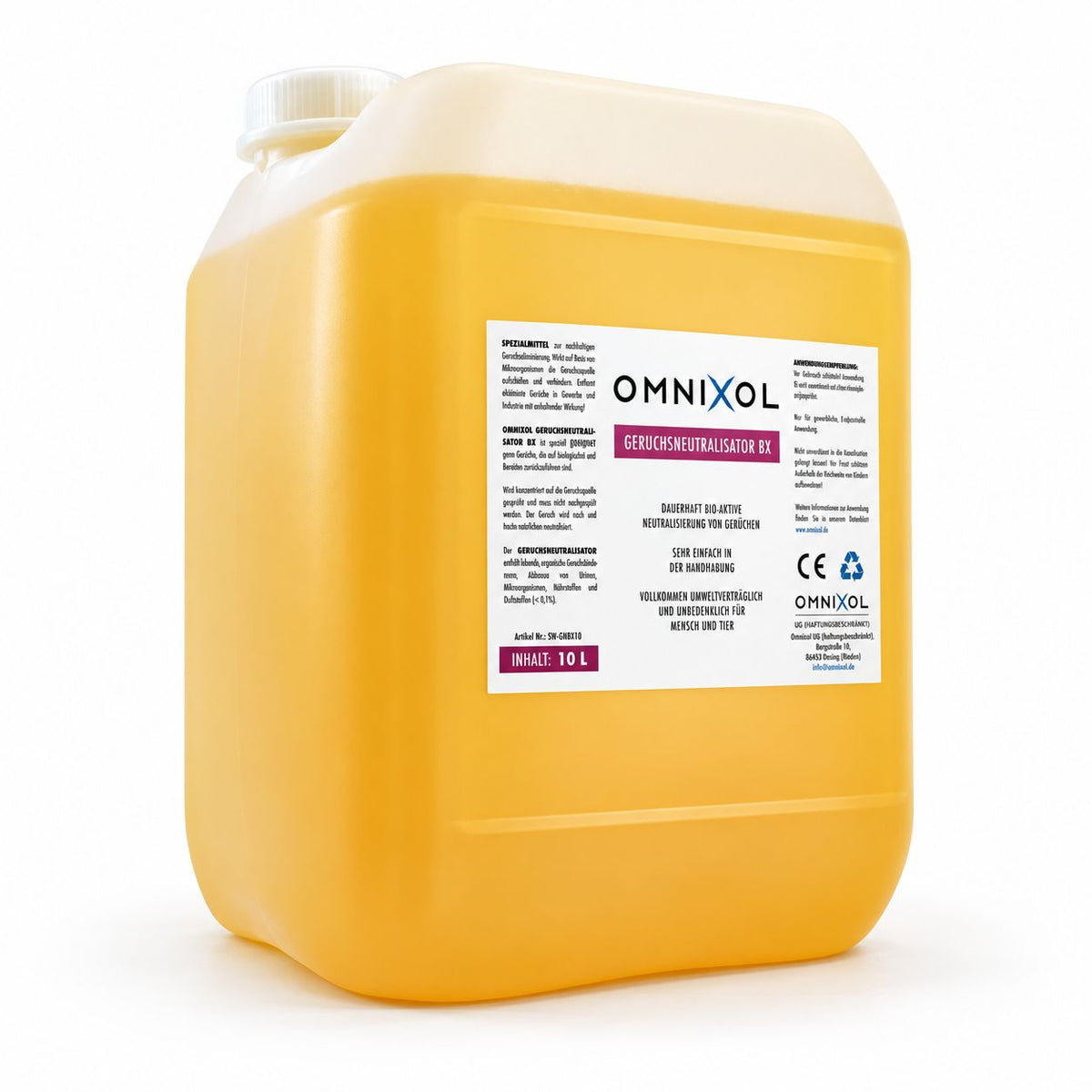
Omnixol BX Odor Neutralizer
Omnixol BX Odor Neutralizer
Couldn't load pickup availability
Omnixol BX Odor Neutralizer is a bioactive odor neutralizer developed for the targeted treatment of persistent and unpleasant organic odors in rooms as well as on suitable surfaces and textiles.
BX is suitable, among other applications, for neutralizing odors caused by heating oil, diesel, cooking oil, grease and other organic sources.
Unlike conventional fragrance sprays, unpleasant odors are not simply masked with perfumes. BX uses a bioactive or microbial mode of action to treat the organic components responsible for the odor.
How Does Omnixol BX Work?
Omnixol BX works on the basis of a bioactive or microbial mode of action. Microorganisms support the breakdown of accessible organic odor-causing substances and thereby contribute to neutralizing the odor contamination.
This distinguishes BX from products that merely cover an unpleasant odor with a stronger fragrance.
BX is not a conventional disinfectant or bactericidal product. It has been specifically developed for the neutralization of unpleasant odors.
Typical Applications
Omnixol BX is suitable, among other applications, for:
- living areas, basements and utility rooms
- heating and technical rooms
- heating oil and diesel odors after the contamination has been cleaned
- cooking oil and grease odors
- suitable walls and floors
- carpets and upholstery
- suitable wallpaper and wall surfaces
- vehicle interiors
- odor-contaminated surfaces and textiles
- residual odors after cleaning or remediation work
BX can be used both as a stand-alone odor neutralizer and following a prior cleaning process.
Use Concentrated or Diluted
Depending on the type and intensity of the odor contamination, Omnixol BX can be used concentrated or diluted with water.
Dilution with water is possible up to a ratio of 1 : 2.
For stronger odor contamination, use a more concentrated solution accordingly.
How to Apply Omnixol BX Correctly
BX is applied as a fine and even spray mist to suitable odor-contaminated surfaces or into the affected area.
Suitable application equipment includes:
- fine mist spray bottle
- pressure sprayer
- suitable spraying equipment for larger areas
The surface should be treated evenly. Excessive soaking is not necessary for odor neutralization.
On textiles, wallpaper and sensitive or unknown surfaces, BX should first be tested in an inconspicuous area for material compatibility and possible staining before large-area application.
Application in Rooms
Unpleasant odors may not only be noticeable directly at a single odor source, but can also spread throughout a room and adhere to suitable surfaces and textiles.
BX can therefore be sprayed specifically onto suitable odor-contaminated areas.
In general, it is important that an existing and removable odor source is not simply left untreated.
Special Case: Heating Oil and Diesel Damage
In the case of actual heating oil, diesel or mineral oil damage, a distinction must be made between the actual contamination and the resulting odor contamination.
If heating oil, diesel or mineral oil is still present in the building material, upholstery or another material, this contamination must first be treated. In this case, BX does not replace the required cleaning process.
- For contaminated concrete, screed, masonry or plaster, Omnixol FX100 is used for deep cleaning.
- For contaminated textiles, carpets, upholstery and vehicle interiors, Omnixol CX80 is used.
After cleaning has been completed and the material has dried sufficiently, BX can be used for subsequent odor neutralization if residual odors remain.
This prior cleaning is only necessary if oil or diesel contamination is actually still present. For general odor contamination, BX can be used independently.
Allow to Work and Dry
After spraying, BX remains on the treated surface and is not immediately rinsed off.
The treated areas should then be allowed to dry completely. Ensure adequate ventilation during and after application.
The result of the odor neutralization should only be assessed once the treated area has completely dried.
Persistent Odor Contamination
If necessary, the BX treatment can be repeated after complete drying.
If a noticeable odor remains, it should also be checked whether the actual odor source has been completely identified and treated.
Particularly after heating oil or diesel damage, a persistent strong odor may indicate that untreated contamination is still present, for example in masonry, screed, insulation material, upholstery or concealed building components.
What Omnixol BX Does Not Replace in Oil and Diesel Damage
Omnixol BX neutralizes odors, but if oil or diesel contamination is still present, it does not replace the cleaning of the contaminated material.
BX should therefore not be used as the sole measure in cases involving:
- visible heating oil or diesel stains
- liquid or standing oil
- heavily oil-saturated concrete or screed
- oil-contaminated masonry
- upholstery or carpets saturated with diesel or oil
In these cases, the actual contamination is treated first. BX is then used for odor neutralization if required.
Safety Information
Before use, please observe the information provided in the product information sheet and the current safety data sheet.
Ensure adequate ventilation during application, avoid eye contact and do not deliberately inhale spray mist. Suitable personal protective equipment should be used according to the specific working conditions.
In the case of previous oil or diesel damage, any additional protective measures required due to the original contamination must also be observed.
Application & Further Information
Share