Omnixol
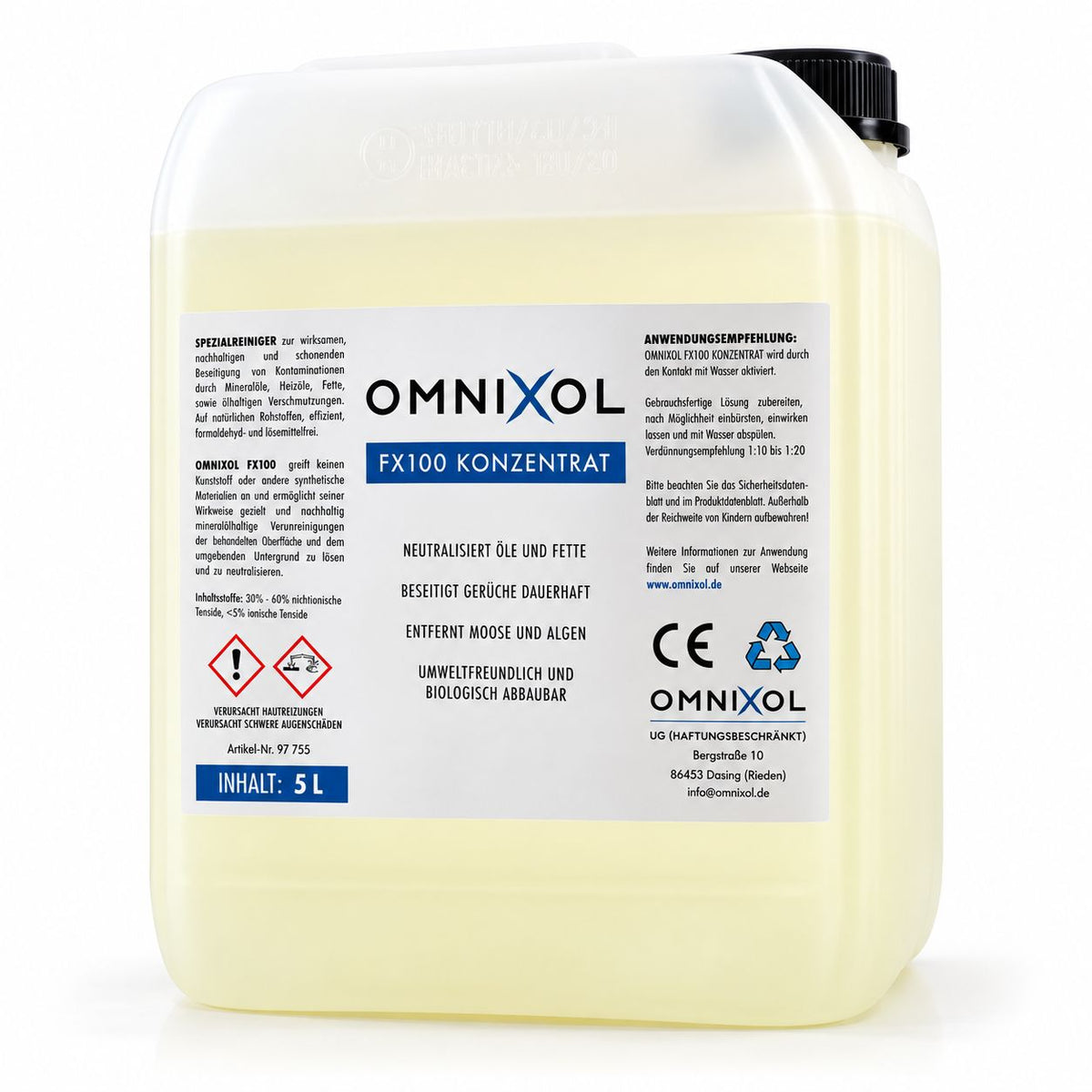
Omnixol FX100 Concentrate
Omnixol FX100 Concentrate
Couldn't load pickup availability
Omnixol FX100 Concentrate is a powerful cleaning concentrate designed for treating surfaces and building materials contaminated with heating oil, diesel, mineral oils, grease or comparable hydrocarbons.
FX100 is particularly suitable for deep cleaning oil and heating oil damage in basements, tank rooms and on absorbent mineral substrates such as masonry, plaster, concrete and screed.
How Omnixol FX100 Works
FX100 is diluted with water before use. During treatment, oil-containing contaminants are dispersed and emulsified. This helps mobilize hydrocarbons from the pores and capillaries of the substrate and transport them toward the surface.
During this process, milky-white, damp or oily residues may appear on the surface. This effect results from the mobilization of contaminants previously bound within the substrate.
FX100 contains no petroleum-based ingredients. The formulation consists exclusively of compounds of plant origin.
How does FX100 work within the substrate? Detailed explanation →
Typical Applications
Omnixol FX100 is particularly suitable for:
- heating oil and oil damage in basements and tank rooms
- oil-contaminated masonry and plaster
- concrete and screed
- mineral floors and industrial flooring
- oil- and grease-containing contamination on absorbent mineral surfaces
- older oil contamination in porous building materials
Even when no current oil leakage is visible, hydrocarbons may have penetrated plaster, masonry, concrete or screed over many years and can continue to cause odors.
Mixing Ratio
For heavy or deep-seated contamination, we recommend diluting FX100 at approximately 1 : 10 with water.
For normal to lighter contamination, FX100 can be diluted up to approximately 1 : 20 with water. Warm water is recommended where possible.
Preparing the Substrate
Before treatment, the substrate should be as dry as possible and free from dust and loose contamination.
For older heating oil contamination, we recommend bringing the affected area to a temperature of at least approximately 20 °C before application. Relative humidity should ideally remain below 50 %.
Heating may temporarily intensify the heating oil odor because volatile components can be released more strongly from contaminated building materials.
Water-repellent, oil-resistant or sealing coatings must be removed from the contaminated area if they prevent the FX100 working solution from penetrating into the underlying building material.
How to Apply FX100 Correctly
The prepared FX100 working solution should be applied generously to the contaminated substrate and worked into the surface.
Depending on the surface, suitable tools include:
- scrubbing brush
- masonry brush
- pressure sprayer
Absorbent surfaces must be treated with a sufficient amount of working solution. Lightly wetting the surface is not sufficient for deep-seated contamination.
Contact Time
The recommended contact time is approximately 24 hours.
During this period, mobilized contaminants may reach the surface together with the cleaning solution and become visible as milky-white, damp or oily residues.
Remove Residues and Rinse with Clean Water
After the contact time, residues that have emerged or remain on the surface should first be removed completely.
The treated surface should then be thoroughly rinsed with clean water. The rinse water should subsequently be completely removed using a wet vacuum or suitable absorbent material.
This removes remaining cleaning solution as well as mobilized oil and dirt residues from the surface.
Coverage
As a general guideline, 1 liter of FX100 Concentrate is sufficient for approximately 10 m² of surface for a single treatment.
Actual consumption depends in particular on the absorbency of the substrate as well as the severity and depth of the contamination.
One thorough treatment is often sufficient. In cases of particularly heavy or deep-seated contamination, a second application may be necessary after the substrate has completely dried and the result has been assessed.
Deep Contamination in Masonry
Heating oil can penetrate deeply into plaster and masonry. It is therefore essential that the FX100 working solution reaches the actual contaminated area.
In cases of severe contamination, it may be advisable to remove contaminated plaster before treatment. This provides direct access to the underlying masonry.
For deep-seated contamination, targeted drill holes may additionally be used to introduce the working solution deeper into solid mineral building components.
Before drilling, it must be ensured that cables, pipes, reinforcement, waterproofing or other relevant building components cannot be damaged.
After Treatment
After cleaning and rinsing, the treated substrate must dry completely.
Further remediation steps such as replastering, coating or sealing should only be carried out once the surface is dry and the original odor contamination has been eliminated.
This helps prevent remaining moisture or odor-causing substances from becoming trapped within the building material.
What to Do if Odor Remains
Once the actual oil contamination has been treated and the substrate has completely dried, Omnixol BX Odor Neutralizer can be used if residual odors remain.
For heating oil and mineral oil damage, cleaning followed by odor neutralization forms the Omnixol Two-Step System.
Learn more about the Omnixol Two-Step System →
Safety Information
Before use, please observe the information provided in the product information sheet and the current safety data sheet.
When working in heavily oil-contaminated or heated rooms, adequate ventilation must be ensured. Suitable personal protective equipment should be used according to the specific working conditions.
When handling heating oil and mineral oil damage, potential ignition sources in the working area must be avoided.
Application & Further Information
Share